
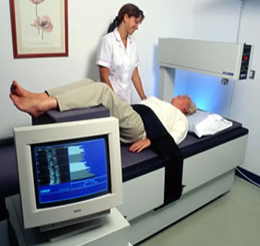
What is a bone density scan (DEXA) ?
Bone density scanning, also called dual - energy X - ray absorpti-ometry (DEXA) or bone densitometry, is an enhanced form of X - ray technology that is used to measure bone loss. DEXA is today's established standard for measuring bone mineral density (BMD).
DEXA is most often performed on the lower spine and hips. In children and some adults, the whole body is sometimes scanned. Peripheral devices that use x - ray or ultrasound are sometimes used to screen for low bone mass. In some communities, a CT scan with special software can also be used to diagnose or monitor low bone mass (QCT). This is accurate but less commonly used than DEXA scanning.
What are some common uses of the procedure ?
DEXA is most often used to diagnose osteoporosis, a condition that often affects women after menopause but may also be found in men. Osteoporosis involves a gradual loss of calcium, as well as structural changes, causing the bones to become thinner, more fragile and more likely to break.
DEXA is also effective in tracking the effects of treatment for osteoporosis and other conditions that cause bone loss. The DEXA test can also assess an individual's risk for developing fractures . The risk of fracture is affected by age, body weight, history of prior fracture, family history of osteoporotic fractures and life style issues such as cigarate smoking and excessive alcohol consumption. These factors are taken into consideration when deciding the patient need therapy.